I love to garden in the morning while it’s still cool and I can feel the sun warming my back as I work.
And since I reside in the northeast, I enjoy these times because my outdoor gardening is on hold until the spring thaw after the first frost in late October.
I have a few sunny windows in my house, which is great since I can utilize them to show off a variety of houseplants that like bright light.
This article talks about 21 houseplants that do well in bright light. You may grow them in the happiest places in your home to keep your green thumb happy all year long.
For each entry, you’ll find links to full growing directions and places to buy the plants.
Here is our fantastic lineup:
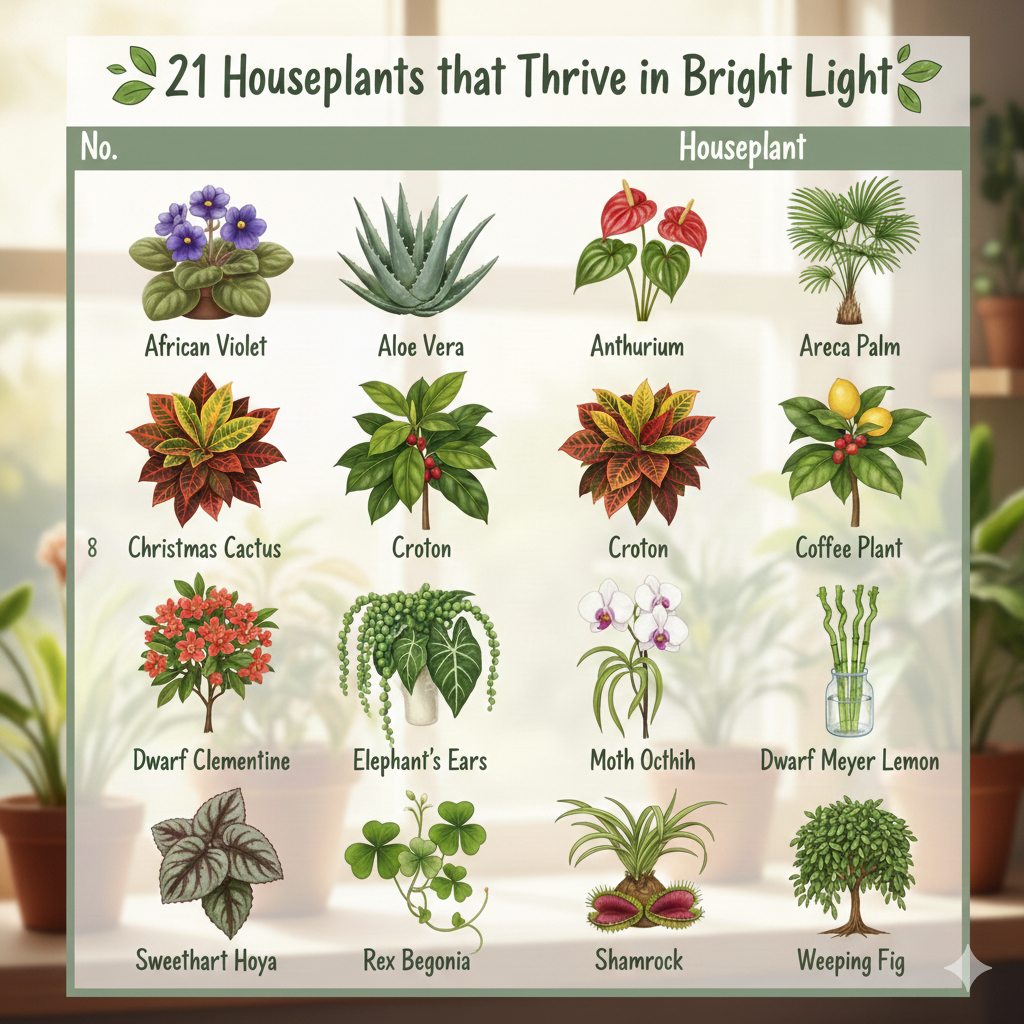
21 Houseplants That Do Well in Bright Light
| # | Plant Name | Category | Notable Feature |
| 1 | African Violet | Flowering | Vibrant fuzzy leaves and purple blooms. |
| 2 | Aloe Vera | Succulent | Thick, fleshy leaves used for medicinal purposes. |
| 3 | Anthurium | Flowering | Heart-shaped, waxy red “flowers.” |
| 4 | Areca Palm | Palm | Feathery, arching fronds; great for height. |
| 5 | Christmas Cactus | Succulent | Blooms in winter; prefers bright, indirect light. |
| 6 | Coffee Plant | Tree/Shrub | Glossy dark green leaves; produces coffee beans. |
| 7 | Croton | Foliage | Striking multicolored leaves (red, orange, yellow). |
| 8 | Donkey’s Tail | Succulent | Trailing stems with plump, teardrop leaves. |
| 9 | Dwarf Clementine | Fruit Tree | Fragrant blossoms and small edible citrus. |
| 10 | Dwarf Meyer Lemon | Fruit Tree | Produces sweet, thin-skinned lemons. |
| 11 | Elephant’s Ears | Foliage | Massive, heart-shaped dramatic leaves. |
| 12 | Flaming Katy | Succulent | Dense clusters of tiny, colorful flowers. |
| 13 | Haworthia | Succulent | Small, hardy, and often striped (Zebra plant). |
| 14 | Lucky Bamboo | Foliage | Actually a Dracaena; grows in water or soil. |
| 15 | Moth Orchid | Flowering | Long-lasting, elegant butterfly-shaped blooms. |
| 16 | Ponytail Palm | Succulent/Tree | Bulbous trunk with wispy, curly leaves. |
| 17 | Rex Begonia | Foliage | Known for metallic, swirled, or colorful patterns. |
| 18 | Shamrock | Foliage | Delicate clover-like leaves that fold at night. |
| 19 | Sweetheart Hoya | Succulent/Vine | Distinctive heart-shaped leaves. |
| 20 | Venus Flytrap | Carnivorous | Unique “traps” that catch small insects. |
| 21 | Weeping Fig | Tree | Classic indoor tree with elegant, drooping leaves. |
The experts at the New York Botanical Garden say that plants that are two to three feet away from a south-facing window should get direct sunshine, while plants that are three to five feet away should get brilliant, indirect light.
Most houseplants do best in bright, indirect sunshine.
This keeps the harsh rays that come through window glass from burning or discoloring the leaves.
If you put pots on a windowsill, keep an eye out for signs of overexposure and move them closer or farther away as needed. Rotate the pots every now and again so that all of the leaves get some sun.
Some of the plants in this list may also do well in medium-light situations. If you want to learn more about houseplants that do well in low light, check out our guide!
Read on to find 21 fascinating houseplants that will look great in bright places of your home. Pick your new faves!
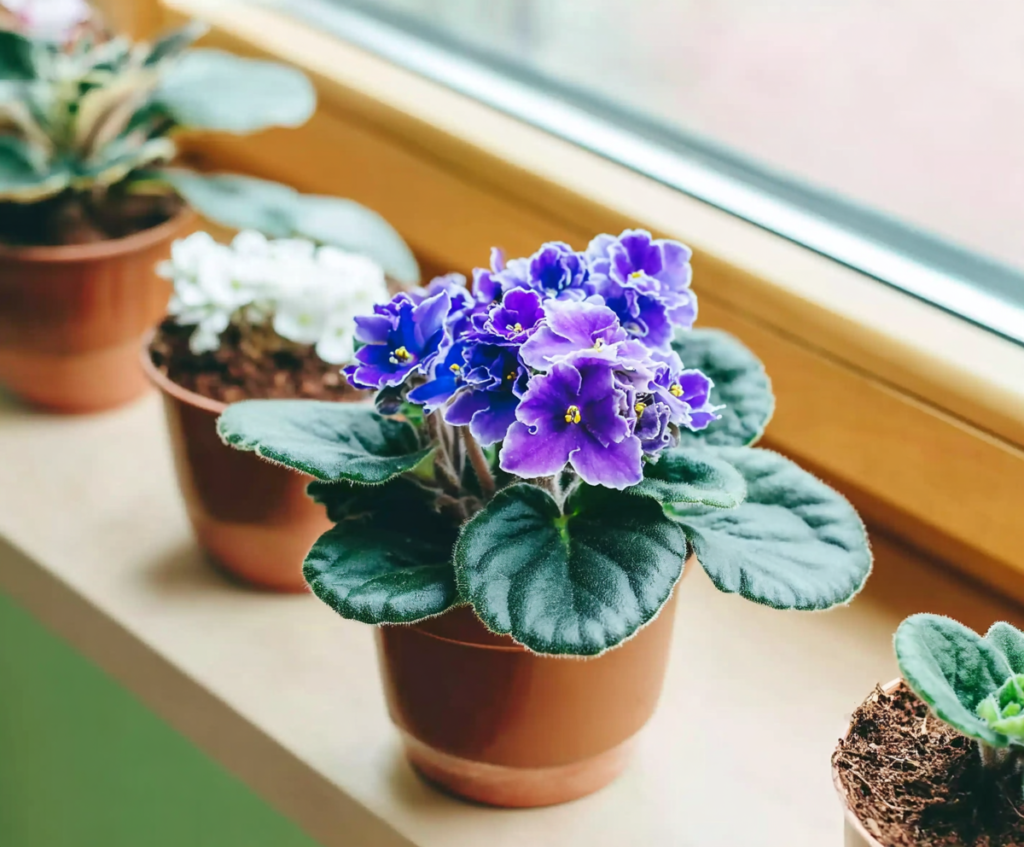
African Violet
The African violet, Streptocarpus subg. Streptocarpella sect. Saintpaulia is a little flower with a circular or heart-shaped whorl of fuzzy leaves. The top leaves are green while the bottom leaves are often purple.
The flowers, which might be blue, orange, pink, purple, red, or yellow, are the main attraction. They can even be two colors or have fringes.
Violets from Africa
Plants can grow to be six to twenty-four inches tall and wide, like rich, loamy soil, and need a reasonable amount of water.
The best temperature range is between 65 and 80 degrees Fahrenheit, with strong, indirect light, and about 80 percent humidity.
You can buy a four-pack of African violets from the Optimara series in four-inch pots on Amazon from Optiflora.
For additional information, please visit our tutorial on how to grow African violets.
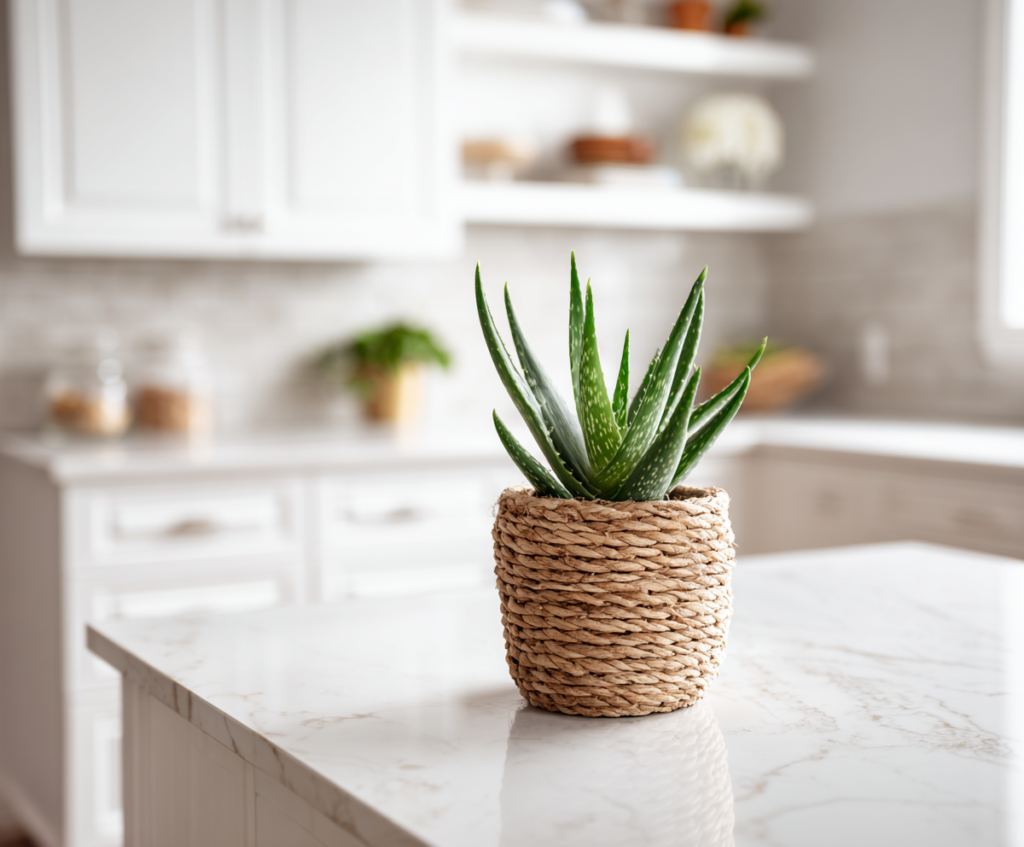
Aloe Vera
Aloe vera, often known as A. Barbadensis is a tropical succulent that stays green all year and has a very short stem. It keeps water in its fleshy, pointed, and serrated leaves.
The new leaves are green with white spots. Indoor plants probably won’t bloom, but outdoor plants do, with stalks that are about three feet tall and flowers that are greenish-yellow.
The cores of aloe leaves are gel-like and offer anti-inflammatory qualities. For a long time, herbalists have used this gel to treat burns and stings. Some people may be allergic to the latex coating in the leaves.
Aloe Vera
When grown inside, they will reach heights of one to three feet and widths of two to three feet. Plants like sandy, loose soil and don’t need a lot of water.
The best temperature for growing is between 55 and 85 degrees Fahrenheit. Aloe doesn’t need a lot of moisture, so a normal indoor humidity level of 30 to 50 percent is fine.
Fast Growing Trees sells aloe vera plants in containers that hold one gallon of water.
Our guide to cultivating aloe provides all the information you need.
Anthurium
Anthurium, also known as Anthurium spp., is a tropical perennial epiphyte that grows on other plants in its native habitat.
Some species make vividly colored leaf varieties called “spathes,” which include a central “spadix” or fleshy stalk with many small flowers.
The hues of the spathes can be different and include gold, green, purple, red, yellow, and white.
Keep in mind that this plant is poisonous to both people and animals, so be careful where you put it if you have kids or dogs who like to explore.
Anthurium with a red heart
Expect it to grow to a height of 12 to 24 inches and a width of 5 to 12 inches. If you want to grow anthuriums, use a loose, airy potting mix like you would for a cactus or an orchid. Moderate amount of water needed.
During the day, the temperature should be between 78 and 90 degrees Fahrenheit, and at night, it should be between 70 and 75 degrees Fahrenheit. The ideal humidity level is 50% or greater.
Fast Growing Trees sells red anthurium plants.
For additional information, check out our guide to cultivating anthurium.
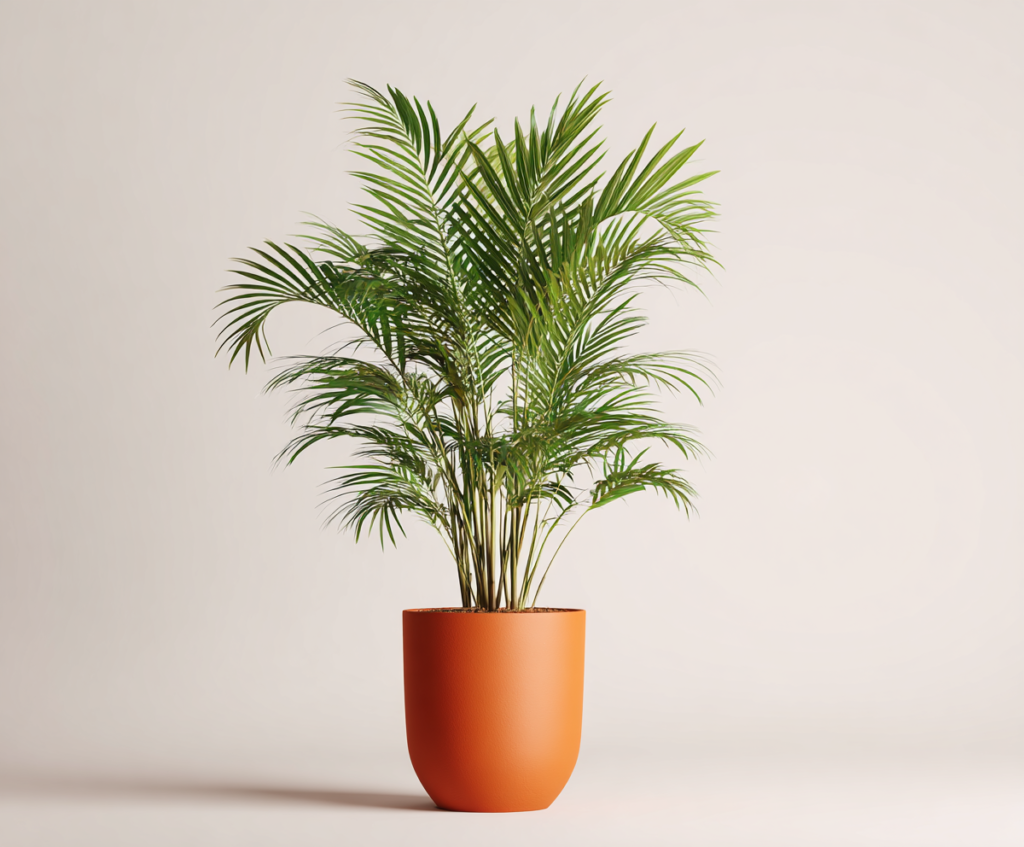
Palm of Areca
The tropical areca palm, also known as the bamboo palm, has many stems and slender, fluffy green leaves that make a strong impression in home decor.
Expect them to grow to be five to eight feet tall and three feet wide. Areca palms like soil that is rich in organic matter and don’t need a lot of water.
Palm of Areca
The optimal place for this plant is where there is strong, indirect light, daily temperatures between 75 and 85 degrees Fahrenheit, nights above 65 degrees Fahrenheit, and humidity of at least 45%.
Fast Growing Trees sells areca palms.
There is more information in our guide to growing areca palm.
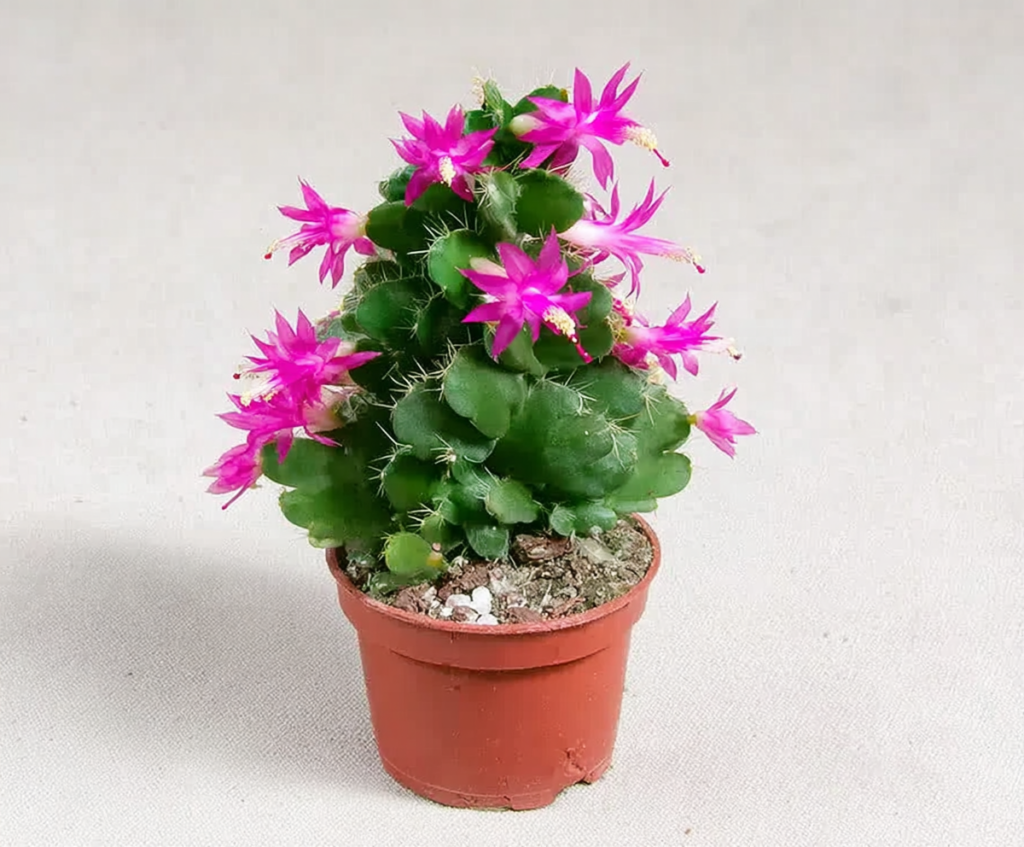
Cactus de Navidad
The Christmas cactus, often called the holiday cactus, is a tropical succulent that blooms.
In its native rainforest, it grows as an epiphyte, which means it doesn’t need soil and gets support from tree bark and other natural things.
The leaves are different because they have segmented cladodes. The arching ends of the plant have tubular blooms with many petals that come in orange, pink, purple, red, salmon, white, and yellow.
Cactus for Christmas
The size of an adult is one foot tall and two feet wide. Christmas cacti need soil that is rich in organic matter and doesn’t need a lot of water.
The best places to grow plants in bright light are those with daily temperatures around 70°F and nighttime temperatures between 60°F and 65°F. These plants thrive best when the humidity inside is over 50%.
Wayfair sells Christmas cacti.
For information on how to grow your Christmas cactus, see our guide.
Coffee Plant
The coffee plant, Coffea arabica, has dark green, shiny leaves and scarlet fruits that grow in clusters along its woody stalks. Each fruit has one to two coffee seeds or “beans” inside.
Plants that grow outside are more likely to blossom and bear fruit than plants that grow inside.
Plant for coffee
When fully grown, they can be six feet tall and three feet wide. Most of the time, indoor plants are smaller and easy to trim. Coffee plants like soil that is loamy and rich in organic matter, and they don’t need a lot of water.
They like lots of strong light, temperatures between 64 and 72 degrees Fahrenheit, and humidity levels above 50%.
Fast Growing Trees sells coffee plants.
For more details, check out our tutorial on how to grow coffee plants.
Croton
Tropical croton, Codiaeum variegatum, has beautiful leaves that are bright green, orange, red, and yellow.
There could be clusters of tiny white flowers that look like stars. Please be aware that crotons are poisonous to both people and animals.
Mature heights range from two to six feet. Crotons like soil that is rich in organic matter and doesn’t need a lot of water.
The best conditions for plants indoors are temperatures between 60 and 85 degrees Fahrenheit, strong, indirect light, and humidity levels above 50%.
“Petra” Croton
C. Variegatum “Petra” has beautiful variegation and grows to be seven to ten feet tall and four to six feet broad.
Fast Growing Trees sells “Petra.”
Our guide to cultivating crotons has all the information you need.
The Tail of the Donkey
Sedum morganianum, often known as donkey or burro’s tail, is an evergreen succulent with long strands of mushy blue-green leaves that look white.
It’s not common for plants to bloom indoors. When they do, clusters of small pink or red star-shaped flowers appear at the ends of the leaves.
Donkey’s Tail
The tails of donkeys can grow up to four feet long and one and a half feet wide. They like potting soil for cacti and succulents that drains well and doesn’t need a lot of water.
During the warm summer months, keeping pots outside in a bright place and in the winter, keeping them between 50 and 69°F may help them bloom.
You may get Donkey’s Tail from the CTS Air Plant Store on Amazon.
There is more information in our guide to growing donkey tails.
Dwarf Clementine
Tropical dwarf citrus trees are great houseplants because they have shiny green leaves, aromatic flowers, and tasty fruit.
Clementine, or Citrus x clementina, is a hybrid that was made by combining a sweet orange with a mandarin orange. The white flowers smell good.
The “EasyPeel” dwarf clementine grows to be about eight feet tall and four to six feet wide when fully grown.
Most of the time, indoor plants are smaller and easy to trim to keep them tiny. The best soil is sandy and has a lot of organic matter in it.
Dwarf Clementine “EasyPeel”
To grow clementines, keep the temperature between 65 and 70 degrees Fahrenheit during the day and 55 and 60 degrees Fahrenheit at night. Don’t let the humidity drop below 50%.
Fast Growing Trees sells “EasyPeel” miniature clementine trees.
For additional details, check out our guide on how to grow dwarf citrus plants.
Dwarf Meyer Lemon
The Meyer lemon, Citrus x limon ‘Meyer,’ is another dwarf citrus tree you might appreciate. It has shiny green leaves and sweet-smelling white blooms.
A lot of chefs think this is one of the best-tasting lemons. It is actually a mix of a citron and a mandarin or pomelo.
When fully grown, they can be six to ten feet tall and four to five feet wide. However, indoor plants are usually smaller and easy to trim. Grow in sandy loam. Needs for moisture are modest.
Dwarf Meyer Lemon
The plant will be pleased if it gets a lot of sunlight during the day, the temperature is around 65°F at night, and the humidity is above 50%.
Fast Growing Trees sells dwarf Meyer lemon trees.
Ears of an Elephant
The leaves of the elephant’s ears plant, Alocasia spp., are bright green with big white veins.
They are long and pointed, and they look like the ears of the great Asian elephants that live in their native country. These plants are poisonous to people and pets, so be careful.
Different types of plants grow to different heights and widths, but most indoor plants grow between one and six feet tall and one and four feet wide. Elephant ears do best in a potting mix that doesn’t have dirt and is somewhat damp.
They need temperatures of at least 60°F and humidity levels of at least 50%.
Alocasia “Black Velvet” is a great example of an elephant ears plant since its leaves are velvety and green-black. When fully grown, they are one to two feet tall and wide.
Alocasia Black Velvet
They do well in strong light, but don’t put them in direct sunlight because it can burn the leaves.
Fast Growing Trees sells Alocasia “Black Velvet.”
For information on how to grow alocasia, check out our guide.
Katy Kalanchoe in Flames
Flaming Katy kalanchoe, also known as Christmas kalanchoe, is a type of succulent that has thick, waxy, scalloped leaves and tiny blooms with many petals that come in bright colors like orange, pink, purple, red, yellow, and white.
This plant is poisonous to both people and dogs, so please be careful.
Mature plants are between 6 and 18 inches tall and broad. Grow it in cactus and succulent potting soil that doesn’t hold a lot of water.
Katy Kalanchoe on fire
The best temperature range is between 60 and 75 degrees Fahrenheit, with average humidity, in a bright, sunny spot. If Flaming Katy is grown in too much humidity, it may be more likely to get leaf spot illnesses.
You can buy flaming Katy kalanchoe from Walmart.
Our tutorial will help you learn more about how to cultivate flaming Katy.
Haworthia
Haworthia, or Haworthia spp., is a succulent plant with thick, stemless leaves that look like an aloe plant.
Haworthia may produce a raceme or flower stalk with tiny, star-shaped white blooms when grown inside, however this is not always the case.
Depending on the species, the mature height might be anything from three to twenty inches. The widths are from one and a half to twelve inches.
Haworthia
Succulent and cactus potting soil is good for plants because it doesn’t need much water.
Make sure the area is well-lit and has temperatures between 75 and 90°F and humidity levels between 30 and 50 percent.
You may get Haworthias from Hirt’s Gardens on Amazon.
You may find additional information in our guide to cultivating haworthia.
Bamboo of Luck
Dracaena sanderiana, often known as lucky bamboo, has green stems that look like bamboo and leaves that are shaped like lances.
Growing plants indoors is less likely to make the clusters of tiny, white, tubular flowers, but they might still show up. Please be aware that this species is poisonous.
Bamboo of Luck
Expect fully grown plants to be between one and three feet tall and one and two feet broad. Grow in cactus and succulent potting mix or water. Plants don’t need a lot of water.
Lucky bamboo does well in light places and can handle temperatures from 50°F to the upper 90s. The temperature and humidity in the average home are fine.
Wayfair sells lucky bamboo.
For additional details, check out our guide to growing fortunate bamboo.
Moth Orchid
The moth orchid, Phalaenopsis spp., is a tropical epiphyte that grows on bark or rocks in the jungle. It’s one of the simpler orchids to care for.
Brown, orange, pink, yellow, white, or two-color blooms that look like wax grow in clusters along beautifully arching racemes that stick out from leathery green basal foliage.
When fully grown, they can be up to three feet tall and one foot wide. These plants like a potting medium with loose bark and modest amounts of water.
Moth Orchid
A bright area with an interior temperature of around 80°F and nights that drop to around 65°F is best. The humidity should be between 40 and 70 percent.
Hirt’s Gardens sells two-inch pots of moth orchids in a range of hues through Walmart.
For more details, read our article on how to grow moth orchids.
Palm with a ponytail
The ponytail palm, also known as the elephant’s foot, is not a real palm tree. It is more like agave and asparagus.
The leaves are shaped like a fountain and loop back on themselves. The base of the tree has a peculiar water-storing caudex that looks like a pachyderm foot.
Mature plants outside can grow clusters of pink or white blooms above the leaves, but this is not likely to happen inside.
Palm with a ponytail
When fully grown, they are four to eight feet tall and three to five feet wide.
They should be no taller than four feet inside. Ponytail palms like soil that is gritty and don’t need a lot of water.
The optimum place for them is a bright room with a temperature of around 70°F and humidity levels between 30 and 50 percent, which is normal for a healthy home.
Fast Growing Trees sells ponytail palms.
To learn more, read our guide to developing ponytail palms.
Rex Begonia
Begonia x rex-cultorum, also known as tropical rex begonia, is a popular plant because its leaves are artistically variegated and have bumps, ridges, ruffles, a silvery sheen, and hues that range from pink and red to maroon and purple, lavender, and lime green.
Expect it to grow to be six to eighteen inches tall and wide. Rex begonias like a potting mix that is loose and made of peat, and they don’t need a lot of water.
“Red Robin” by Harmony
The best temperature is 70°F during the day and 60°F at night, with at least 50% humidity. Give them bright, indirect light. Keep in mind that this type of plant is poisonous to people and pets.
B. Wayfair sells x rex-cultorum Harmony’s “Red Robin,” which has vivid and dark red leaves.
Here is more information about how to grow rex begonia.
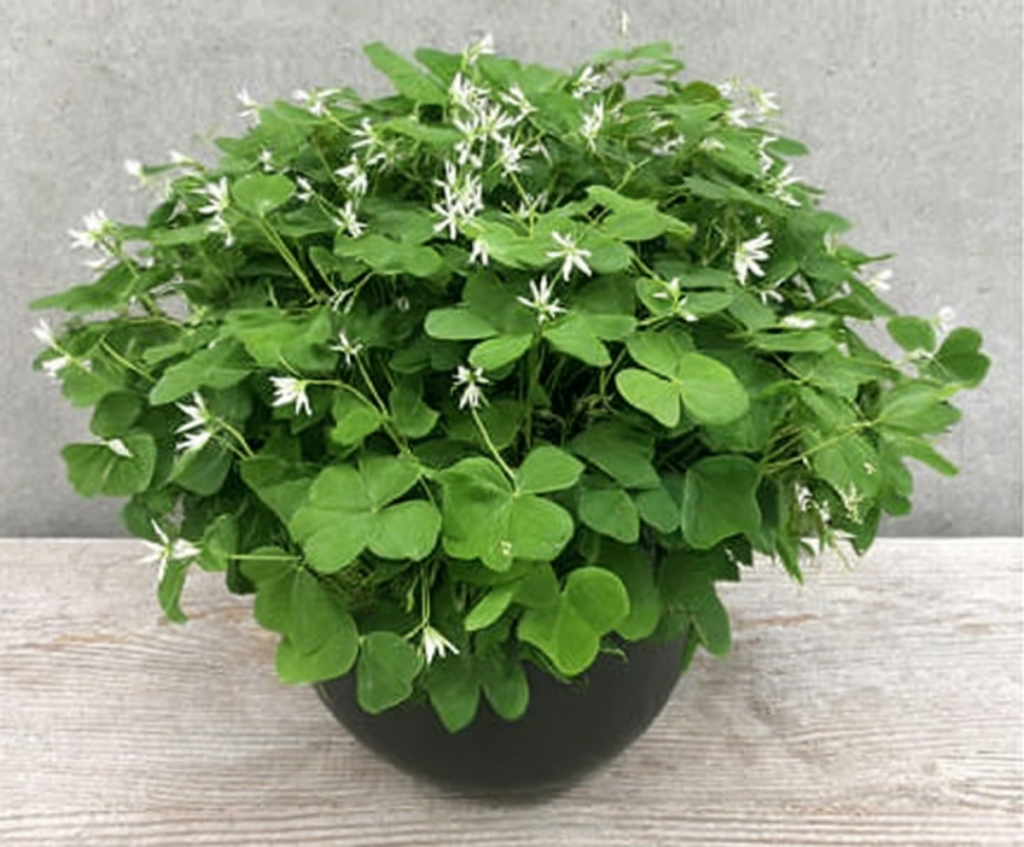
Shamrock
Shamrocks, Oxalis spp., feature heart-shaped leaves that are green, purple, or a mix of colors, and blooms that are pink, red, white, or yellow.
They are not true shamrocks (Trifolium spp.) in the botanical sense, but they do look like the three-lobed leaves.
When fully grown, they can be anywhere from six to 18 inches tall and spread out to 12 to 24 inches. Shamrocks grow best in soil that is rich in organic matter and holds moisture well. They don’t need a lot of water.
Plants with shamrocks
The finest places are sunny regions where the temperature is between 70 and 75°F during the day and between 50 and 60°F at night. If the temperature goes beyond 80°F, plants may become dormant too soon or suffer from heat stress. The best humidity level is over 50%.
A package deal that includes both purple Oxalis triangularis and green O. You can get regnellii from KCT Garden on Amazon.
Check out our tutorial on how to grow shamrocks for more information.
Sweetheart Hoya
The succulent sweetheart hoya, Hoya kerrii, is an epiphyte that grows on other plants in its native tropical habitat.
This vining plant is known for its thick, green, heart-shaped leaves. It will probably have cream-colored flowers indoors that seem like wax.
When fully grown, they can be 10 feet long and 1 to 2 feet wide. This type of plant likes an airy orchid potting mix or a very coarse, loose cactus and succulent soil. It also likes low to moderate amounts of water.
Hoya Sweetheart
The best temperature range for growing is between 65 and 80 degrees Fahrenheit, and it should never go below 60 degrees. The humidity should be between 25 and 49 percent.
You can buy sweetheart hoyas from California Tropicals on Amazon.
For more information, check out our guide to cultivating sweetie hoyas.
Venus Flytrap
The Venus flytrap, Dionaea muscipula, eats insects that pass by and trigger the hairs on its hinged, jaw-like leaves.
It might give you flower stalks with groups of tiny white flowers on them.
The height of a fully grown plant is between six and twelve inches, and the width is between six and eight inches. Plants perform best on soil that is acidic, low in nutrients, and stays moist.
The Venus Flytrap
During the growing season, Venus flytraps like bright light and temperatures between 70 and 95 degrees Fahrenheit. In the winter, when they are dormant, they can handle temperatures as low as 40 degrees Fahrenheit.
The best humidity level is about 50%.
You may buy Venus Flytraps at Joels Carnivorous Plants on Amazon.
Here you may find out more about Venus flytraps.
Crying Fig
The weeping fig, also known as the ficus tree, has many trunks that twist and turn around each other with leaves that are shiny green or have different colors. As the tree grows, the branches slowly bend to create a cascading look.
It can grow up to 14 feet tall and spread four feet, but you may keep it smaller by trimming it. Use regular potting soil and water it moderately.
Fig that weeps
During the day, the temperature should be between 75 and 85 degrees Fahrenheit, and at night, it should be between 60 and 75 degrees Fahrenheit. The humidity should be between 50 and 75 percent.
Fast Growing Trees sells braided weeping fig trees.
Check out our guide to growing weeping figs for more details.
Plant Pals in Bright Light
There are 21 bright-light houseplants to pick from. All you have to do now is clear some space near your sunniest windows or beneath grow lights and start growing your favorites.
Taking care of houseplants is good for your mental health and is exactly what you need after a long, hard day. Take off your shoes, crank on some music, and spend time with your plant friends.