Hot peppers are strangely addictive. And I’m not just talking about how they taste; there’s real science behind it. Capsaicin makes your brain’s pain receptors fire when you eat something spicy. Your body thinks you’re in danger and releases a lot of endorphins to help you deal with it. Some scientists say that those who adore spicy cuisine are only looking for that buzz. It makes logic if you think about it.
By the way, bell peppers don’t do this. They have a recessive gene that prohibits them from making capsaicin, which is why they taste sweet instead of fiery. But all other peppers, from mild poblanos to super-hot peppers that can melt your face off, have different quantities of capsaicin.
There are two main types of peppers: sweet peppers (like bells) and spicy peppers (like chilis). Both of them are in the Capsicum genus, which is the same family as tomatoes, eggplants, and potatoes. The family of nightshades. Peppers, like their cousins, need a lot of sun, warm weather, and soil that drains well.
The Scoville Scale: What It Is
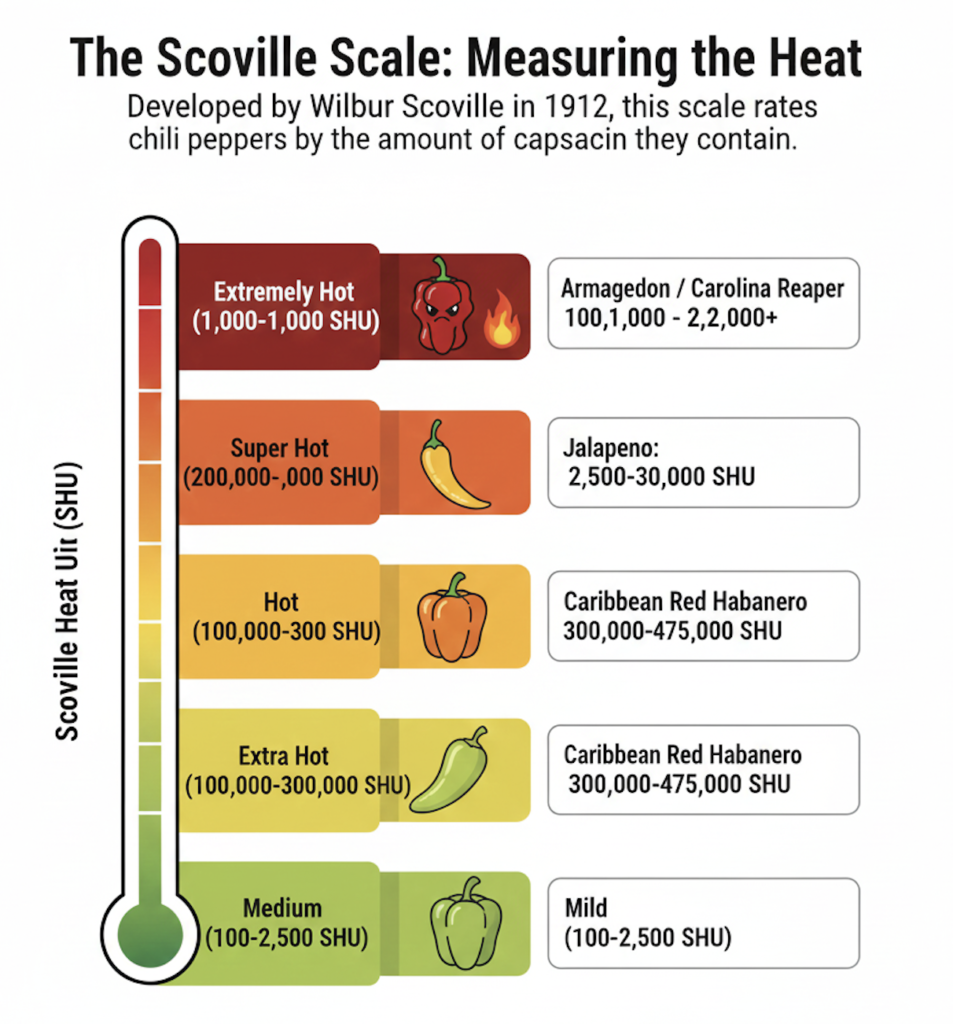
Wilbur Scoville, a pharmacist, came up with the heat measurement technique when he was seeking for chemicals for an ointment that would make things hotter. It gives a number in Scoville Heat Units (SHUs) to the amount of capsaicin in a food.
There are no bell peppers. What are the hottest peppers on Earth? More than 3 million SHUs.
This is how it breaks down:
The SHUs of mild peppers range from 100 to 2,500. Medium is between 2,500 and 30,000. Hot peppers fall between 30,000 and 100,000. Extra hot is between 100,000 and 300,000. Anything above 300,000 is quite hot.
Jalapeños have a heat level of 2,500 to 30,000 SHUs, which is medium. Caribbean Red habanero heirloom has a heat level of 300,000 to 475,000. Then there are kinds like Armageddon, which has 1.3 million SHUs and is really, really hot. I once grew one. I couldn’t really eat it.
Where the Heat Really Comes From
A lot of people think that pepper seeds are what make them hot. That’s not true. The placenta, which is the white pithy membrane where seeds adhere, has about 85% of the capsaicin. If you are interested in more garden-to-table tips, check out our guide on How to Prepare Hot Peppers for Cooking.
Take out that white tissue if you wish to make a pepper less hot. Works for most peppers, anyway.
Capsaicin is stored differently in exceptionally hot peppers, which have more than a million SHUs. The meat of the peppers is equally as hot as the pith. There’s no way to tone them down.
What Makes Peppers Hotter or Milder
Genetics are the most important thing. The type of plant you choose will set your baseline heat level. But the way it grows also matters.
To make fruit, hot peppers need water, heat, and sunlight. Peppers that are fully grown are always hotter than those that are not. Stress makes the heat go up after the fruit develops.hot Peppers will be spicier if the weather is hot and dry. Too much water and fertilizer does the opposite: it dilutes the capsaicin and makes the peppers less hot.
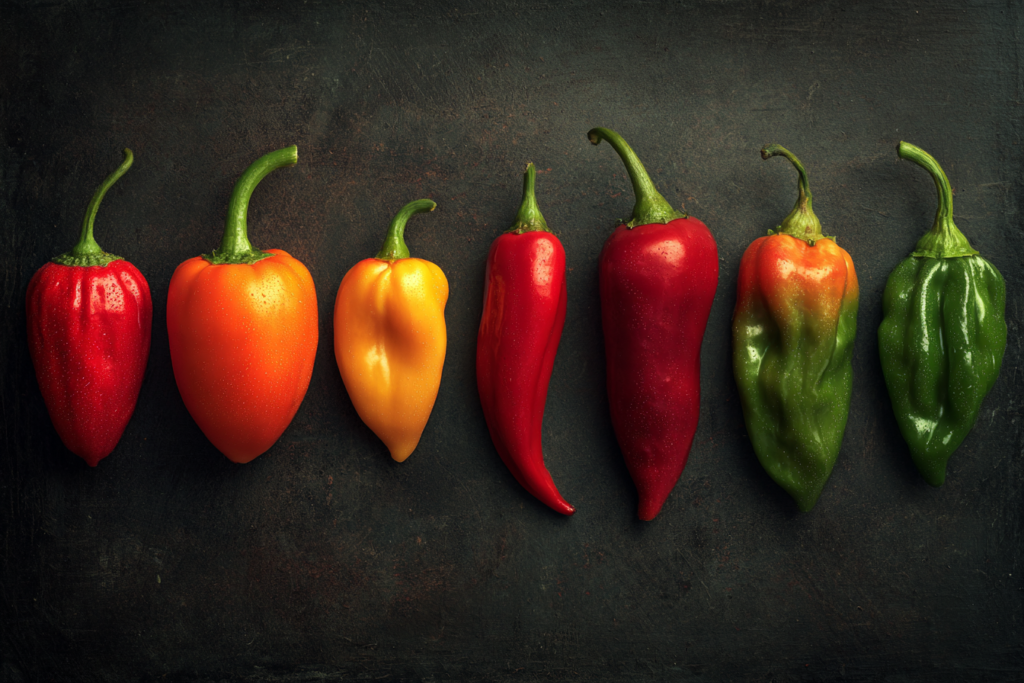
The color and maturity depend on how long the plant has been there. All peppers start out green and change color as they grow up. They might be yellow, orange, red, purple, or even white. The longer bell peppers stay on the vine, the sweeter they get.
As spicy hot peppers grow, they get hotter, but only to a point. Around 40 to 45 days after the fruit sets, the amount of capsaicin is at its highest. It depends on the type after that. As serranos go from green to yellow to red, their peak heat stays the same. After 45 days, cayenne peppers actually get milder as they ripen and lose capsaicin.
Growing Hot Peppers from Seeds
You can plant hot peppers directly in the ground if you have a long growing season and warm weather. That isn’t something most of us can do.
Seven to eight weeks before the latest frost date, start seeds inside. Put organic seed starting mix in a seed beginning tray. Because they take longer to germinate, super-hot types need two more weeks.
Make sure they stay warm, between 70 and 80 degrees, and that there is excellent air flow. If your dwelling is cold, a seedling heat mat can assist. Most pepper seeds sprout in a week to ten days, although some might take up to 21 days.
Cut off the weaker seedlings when they sprout. Don’t pull them; you’ll hurt the roots of the ones you wish to maintain. Put the tray in a sunny window or beneath a grow light. If you’re using artificial light, turn it on for 16 hours and off for 8 hours.
When the risk of frost has passed and the temperature stays above 60 degrees, start hardening off your seedlings. Put them outside in a safe place for longer and longer amounts of time. Gets them acquainted to the wind and the weather outside without scaring them.
Needs for Sun, Soil, and Temperature
Hot Peppers need 6 to 8 hours in direct sunlight every day. Loamy soil that is rich and drains well and has a pH between 6.0 and 6.5 is excellent for them. If you are unsure about your dirt, the USDA Cooperative Extension System offers resources on how to get a professional soil test in your local area.
Peppers enjoy the temperature to be between 70 and 80 degrees during the day and 60 and 70 degrees at night. If the temperature goes over 90 or below 55, they’ll drop blooms, which is annoying when you’re trying to get fruit to grow.
Most Hot peppers prefer it when the air is 60% to 70% humid. Keeps pests and fungal diseases from getting out of hand. Jalapeños, habaneros, cayennes, and Hungarian wax Hot peppers all like it when it’s dry. Habaneros, Scotch Bonnets, and datils do well in wetter weather.
Feeding and Watering
Water the roots early in the day. The idea is to go deep but not very often, perhaps 1 to 2 inches a week. If you have them, soaker hoses or drip irrigation work best.
Let the ground dry out before watering again. It helps roots develop deeper and keeps the soil from being too damp, which might cause difficulties. You might need to water more often when it’s hot or dry, but don’t go overboard.
Mix compost into your soil before you plant. It makes the soil better for Hot peppers by improving its texture, fertility, and drainage. Hot Peppers need nitrogen for their leaves and roots to grow about two weeks after their first genuine leaves appear. When they start to bloom and bear fruit, switch to plant food for tomatoes and vegetables. An organic granular fertilizer that is balanced gives them all the main and secondary nutrients they need without going overboard on any one thing.
When flowers start to bloom, stop giving them nitrogen. If you give them too much, they’ll only grow leaves and not fruit.
In the last two years, don’t plant Hot peppers where you cultivated tomatoes, potatoes, or eggplants. Same family, same ailments, and maybe even the same soil pathogens are still there.
It helps to use mulch. A thick layer of organic mulch keeps the soil moist, controls the temperature, and saves water.
Strange things about pollination
Peppers can pollinate themselves since each bloom has both male and female parts. But they need to shake to let go of pollen. The wind works. Bees and butterflies do work. If you don’t have enough of either, shake the plants yourself.
People sometimes wonder if a hot pepper can pollinate a sweet pepper and make it hot. No, in short. The mother plant gives the fruit its heat. Cross-pollination doesn’t change the fruit that is already there. It could change the seeds in that fruit, which will make the future generation, but not the fruit you’re picking this year.
Pruning to Make More Fruit
Pinch off the first blossoms. Helps plants put their efforts into developing a robust root system before they start to bear fruit. You’ll get more peppers and they’ll be bigger.
Some gardeners pick the first pepper as soon as they see it. Some people take about half of the peppers when they are about full size but not quite ready. If that’s important to you, research shows that fruit from the second node is hotter than fruit from other nodes.
Sweet peppers that are still green won’t taste as wonderful because they aren’t as sweet. Early spicy peppers will not be as hot. But taking them off makes the plant make more flowers and speed up the ripening of the fruit that is already on it.
When you harvest, use sharp, clean pruning shears. Cut the stem off about one inch above the pepper. Pulling can hurt the plant.
When to Choose
Pick the peppers when they are the right size and color. The skin should be smooth and firm. If it feels mushy when you squeeze it, leave it on the vine until the walls are stronger.
What You’ll Need
Seeds or Transplants: Choose types that will grow well in your area and that you wish to eat. It’s easy for beginners to grow Jungle Parrot sweet pepper in pots. The Dragon Roll hot pepper is spicy and sweet at the same time. People who detest their taste buds should try Armageddon Hybrid at 1.3 million SHUs.
Containers or Garden Space: Peppers do well in the ground, on raised beds, or in containers. Make sure your containers drain effectively and are big enough. Five-gallon pots are good for one plant. Bigger containers are needed for more plants.
Stakes and Supports: Pepper plants that are fruiting get top-heavy. Put in supports before you plant. Tie stems with soft things like jute thread or strips of fabric. Make a figure-8 with the tie around the stake, cross the ends, and then make a loop around the stem. Give yourself some room to grow.
Tools and Safety: Use sharp garden shears to cut down plants. If you’re cultivating spicy peppers, you need to wear gloves. The oils will hurt your skin, mouth, eyes, and anywhere else they touch. When you work with spicy peppers, you should always wear gloves. Don’t put your hands on your face. Make sure to wash your hands well after handling them.
Peppers are one of those plants that need care to grow. If you give them decent soil, steady water, and enough heat, they’ll grow a lot all season. It’s partly science and partly trial and error when it comes to the heat level. Enjoy it!
Author: Clara