
The secret to growing tomatoes in heat isn’t just about more water; it’s about protecting the plant’s biological ability to pollinate before the temperature spikes.
Growing Tomatoes in Heat is good for tomatoes. That’s something we all know. There are hot days that are wonderful and warm, but then there are days that are so hot that even those who like the heat can’t tolerate it. When the daytime temps get into the 90s and the nighttime temps stay above 70, your tomato plants will keep trying to bloom. But those flowers won’t turn into tomatoes. They’ll just drop.
I’ve seen this happen in my own garden more times than I like to say. The plants look healthy and have flowers all over them, but then nothing happens. You go crazy trying to figure out what’s going on.
The good news is that you can get around this. If you know how to help them, your plants can keep growing even when it’s hot outside.
Understanding the Science of Growing Tomatoes in Heat
Every day, tomatoes need 6 to 8 hours of sunlight. But as temperatures rise between 85 and 90 degrees, the biology of the plant changes. In these conditions, the pollen becomes tacky and non-viable. The flowers bloom, but because they can’t pollinate, they simply drop off.
When you have to cope with weeks of really hot weather, the plants change a lot. They cease caring about growing tomatoes and start caring about staying alive. All of your energy goes into remaining alive. Even the kinds that were bred to endure heat will slow down a lot.
Tomatoes usually do nicely in full sun all day if you reside in the north and garden. But in the southern states or during a heat wave, you want the sun to come up in the morning and then go down in the afternoon. I know gardeners in Arizona and parts of Texas who don’t even bother with summer tomatoes anymore. They grow them in the winter when the weather is excellent instead. I can’t blame them.
It’s Important to Pick the Right Variety For Growing Tomatoes
Success in growing tomatoes in heat starts with genetics. Choosing heat-set varieties like Arkansas Traveler gives your garden a natural defense against blossom drop.
There are some kinds of tomatoes that do better in the heat than others. The Arkansas Traveler is an old family heirloom that has been around since the 1900s. It acquired its name because it does well in the hot summers of Arkansas. It still works.
Better Boy has more leaves, which protects the fruit from the sun’s rays. Super Sweet 100 is a type of cherry that keeps growing even when other tomatoes cease. Fourth of July and Quarter Century don’t experience the same kind of harm from the sun that happens when it’s really hot.
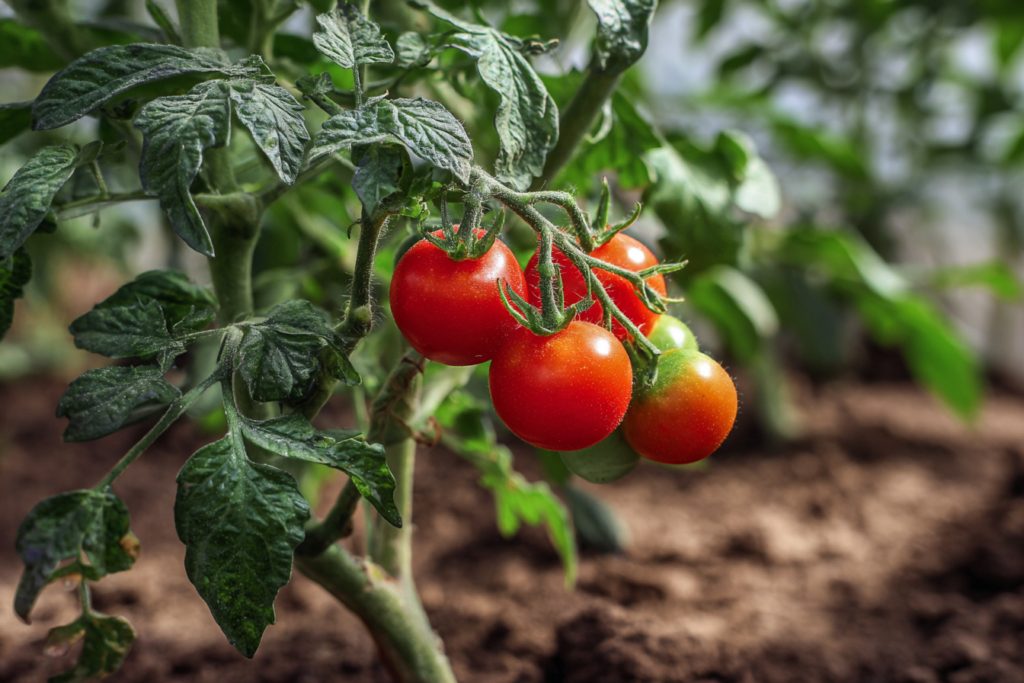
But I would prefer Early Girl if you know when the heat waves will hit. It grows swiftly and can endure heat well. You can bring in the whole harvest before the worst weather hits. This is quite useful for determinate cultivars that all ripen at the same time. Take your harvest off the vine; the heat wave may do what it wants.
You Need to Have the Right Soil
Tomatoes should have a pH level between 6.2 and 6.8. A little bit acidic and easy to drain. If you haven’t done a soil test in a few years, conduct one now. It’s an excellent deal on insurance because if the pH is wrong, your plants won’t be able to get the nutrients they need from the soil.
One tip for growing tomatoes in heat is to avoid heavy fertilizing during a heatwave
Blossom end rot? Are the fruits falling too early? First, look at your pH.
Soil pH: When discussing lime and magnesium, link to a resource like the University of New Hampshire Extension on Soil pH for technical proof.
If it’s too low, lime will boost it. But don’t just dump lime in there without looking. When you acquire more than 6.8 lime, you cease getting magnesium. You’re hurting yourself because magnesium is really crucial for photosynthesis.
Tomatoes need the usual nutrients, such as nitrogen, phosphorus, and potassium, as well as minor amounts of iron and zinc. A good, rich compost does a lot of that and makes your soil stronger. Two birds, one stone.
People want to fertilize when their plants look like they need it, and that’s what gets them. Don’t do it while it’s really hot. When plants are in survival mode, they can’t use nutrients properly. You’re only going to make the leaves grow bigger than the roots can handle. There are a lot of leaves, but no tomatoes. You might also burn the roots or make the food unbalanced in weird ways that make things worse instead of better.
Just Put Down Mulch Already
Consistency is the golden rule when growing tomatoes in heat. Deep, morning watering prevents the stress-cycles that lead to split fruit and blossom end rot.
The one thing that really changes the heat is mulch. Without a question.
I usually use straw as organic mulch, but you could also use chopped leaves, compost, or even grass clippings that haven’t been treated. It keeps the soil’s temperature consistent instead of letting it rise and fall. Stops moisture from just leaving the air. Protects your roots.
It also stops weeds from growing, which is worse than most people think. They don’t simply look bad. They need water, nourishment, and room to grow. Some of them have pests and diseases that can get on your tomatoes.
When you need to, use a hand hoe that cuts weeds off at the ground level. Take your time and be patient if you’re pulling by hand. Pull from the base to make it easier to get the full root system out. You have to be very careful because half of the weeds in my garden will grow back from a root the size of my pinky nail.
Just like growing the best hot peppers, tomatoes require specific nutrient balances to thrive in high heat.
It Gets Harder to Water
One to two inches of water a week is normal. Forget that when it’s really hot. You might be watering every day. You might need to water twice a day if your soil drains quickly or if there is a real drought.
But no matter how often you water, make sure to do it well. You want the water to go all the way down, bringing the roots with it. Watering too often and too shallow makes roots that are too weak to handle stress.
Don’t underestimate the power of shade. When growing tomatoes in heat, your plant’s foliage is its best friend, acting as a natural cooling system for the developing fruit.
Water in the morning. Don’t water the leaves; water the ground. Wet leaves mean you don’t have to cope with being unwell. And don’t drown them; roots can’t get air in moist soil. It destroys plants in a different way than not having enough water does.
The most important thing is to be consistent. Tomatoes don’t like it when you let them dry out completely and then wet them. It makes everything split, break, and rot at the end of the flower. Drip irrigation is probably the best way to keep the soil evenly moist. If you water by hand, just try to do it often.
Allow the top inch or two to dry off before watering again. Tomatoes need proper drainage. Put your finger in the ground. Water it if it comes out clean.
When your plants start to droop, it’s a sign that they need water. Leaves curl up to hold in moisture. They normally come back to life after a good watering. If they don’t get better, you might have a disease instead of just being thirsty.
Cutting Back Less Than You Think
When growing tomatoes in heat, the kitchen counter is often a better ripening environment than the vine. Picking at the ‘breaker stage’ preserves the flavor that extreme sun destroys
People always want to trim their tomato plants. It makes sense in theory: fewer plants, less stress, right?
That’s not true. At least when it’s warm.
That plant life is blocking the sun from hitting your fruit. You acquire sunscald if you cut too much. The sun almost burns your tomatoes. There will be white or brown patches, and sometimes the top of the tomato stays green while the bottom turns red. You get “green shoulders” when you spend too much time in the sun.
Don’t take off more than a third of the leaves, especially when it’s hot. That shade is helpful for your produce.
Pick Before They Are Fully Ripe
When the temperature rises above 85 or 90 degrees, the ripening process slows down a lot or stops completely. Lycopene is what makes tomatoes red, and high heat prevents its production. You end up with tomatoes that seem ripe on the outside but are still green on the inside. The taste is equally strange.
The fruit sometimes has a white core, which is hard white tissue in the middle. This happens when the fruit becomes too hot when it’s maturing.
Here’s the deal: tomatoes don’t need the sun to mature. They need warmth, but not too much of it. Pick them when they start to show color, which is when they reach the breaker stage. Let them finish inside, where it’s between 70 and 75 degrees. You get better flavor when you select them than when you leave them on the vine to deal with the heat.
It Gets Better
The stress from the heat doesn’t last forever. Healthy plants start to bloom again as the temperature drops back down to the 80s. You’ll get a second harvest later in the season.
When it’s really hot, give them shade when you can, don’t fertilize them too much, keep the mulch layer going, water them deeply in the morning instead of lightly and often, be careful while weeding, don’t prune too hard, watch for sun damage, and pick them early if you need to.
The summer heat won’t hurt your plants. You might not think they’re tough, but they are. When the temperature rises, all you have to do is modify what you’re doing.
While it can be difficult, growing tomatoes in heat is entirely possible with the right adjustments. Your plants are tougher than they look. By providing shade, consistent water, and plenty of mulch, you can help them survive the peak of summer and enjoy a second harvest once the temperatures drop.
Author: Clara